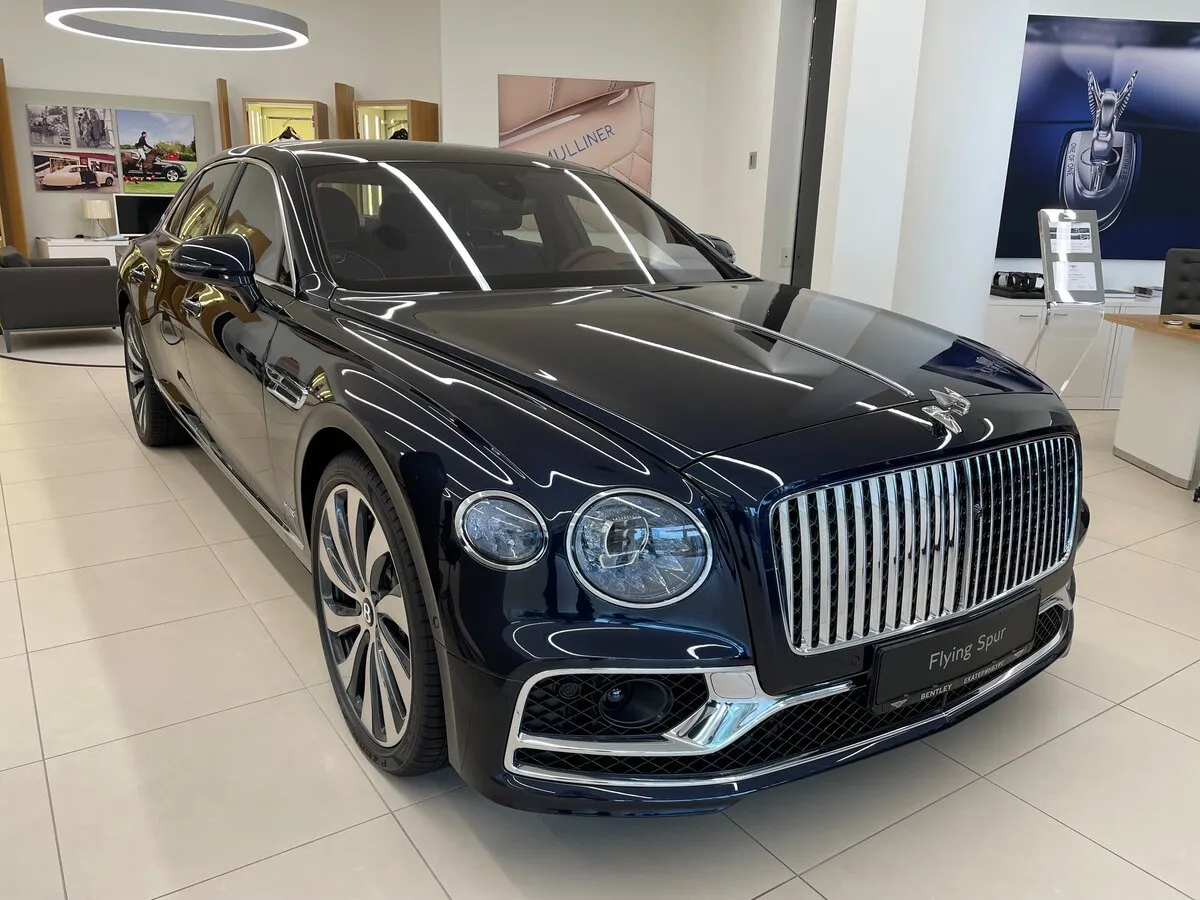
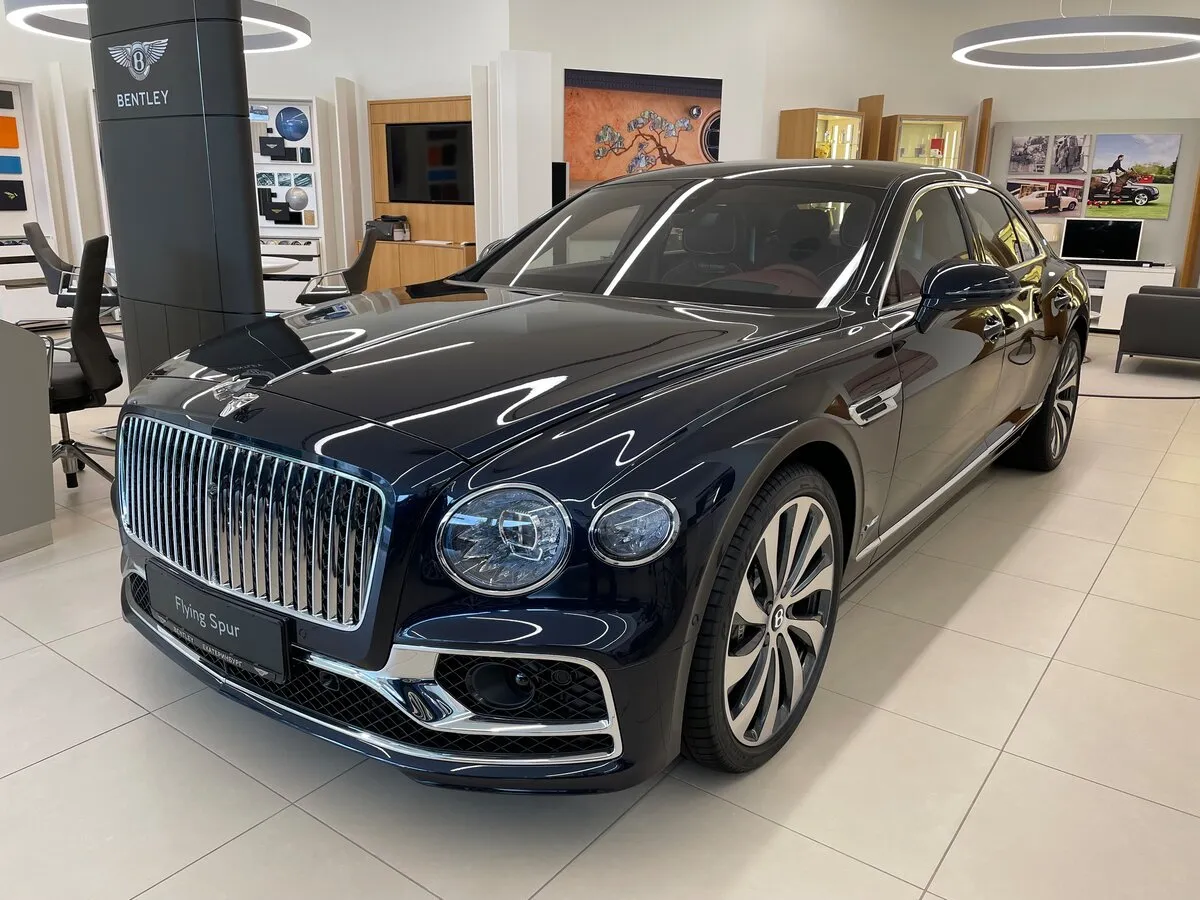
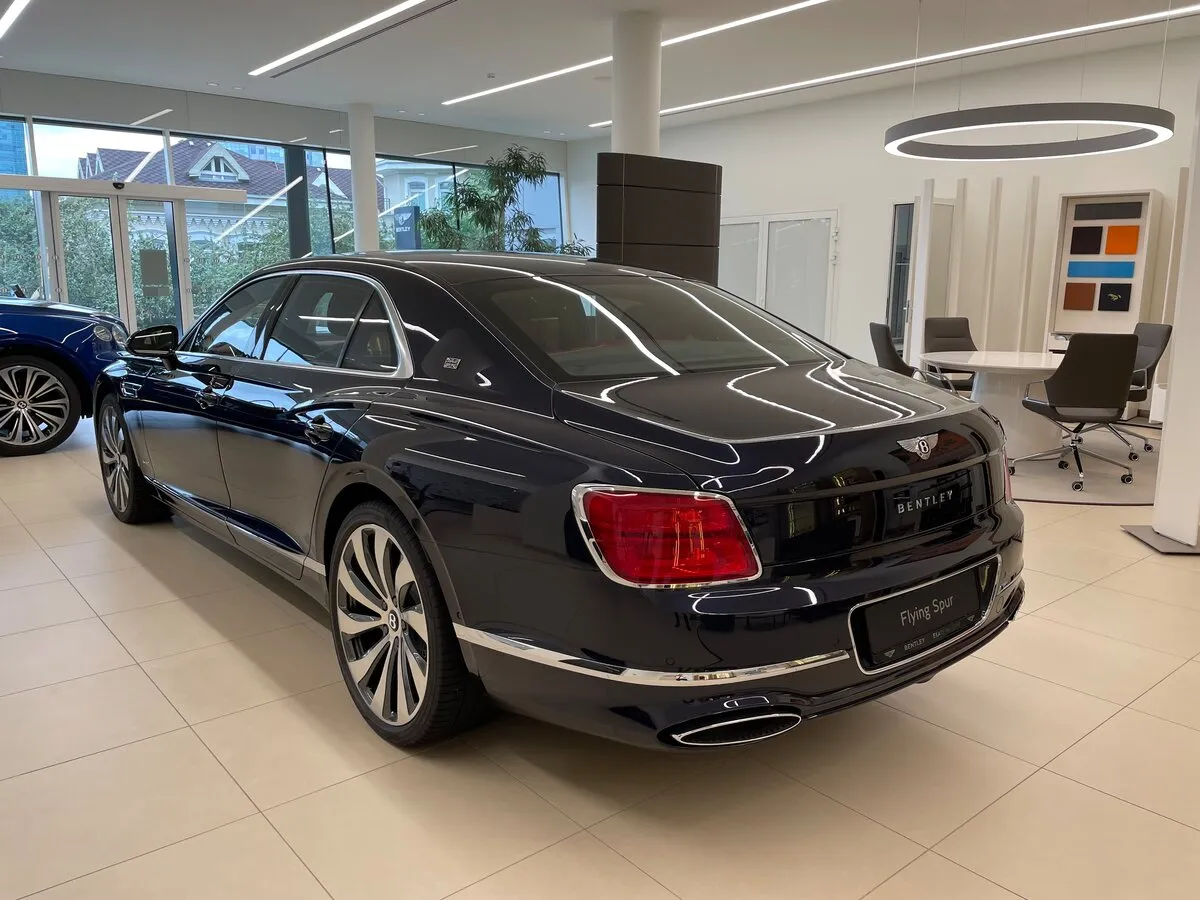
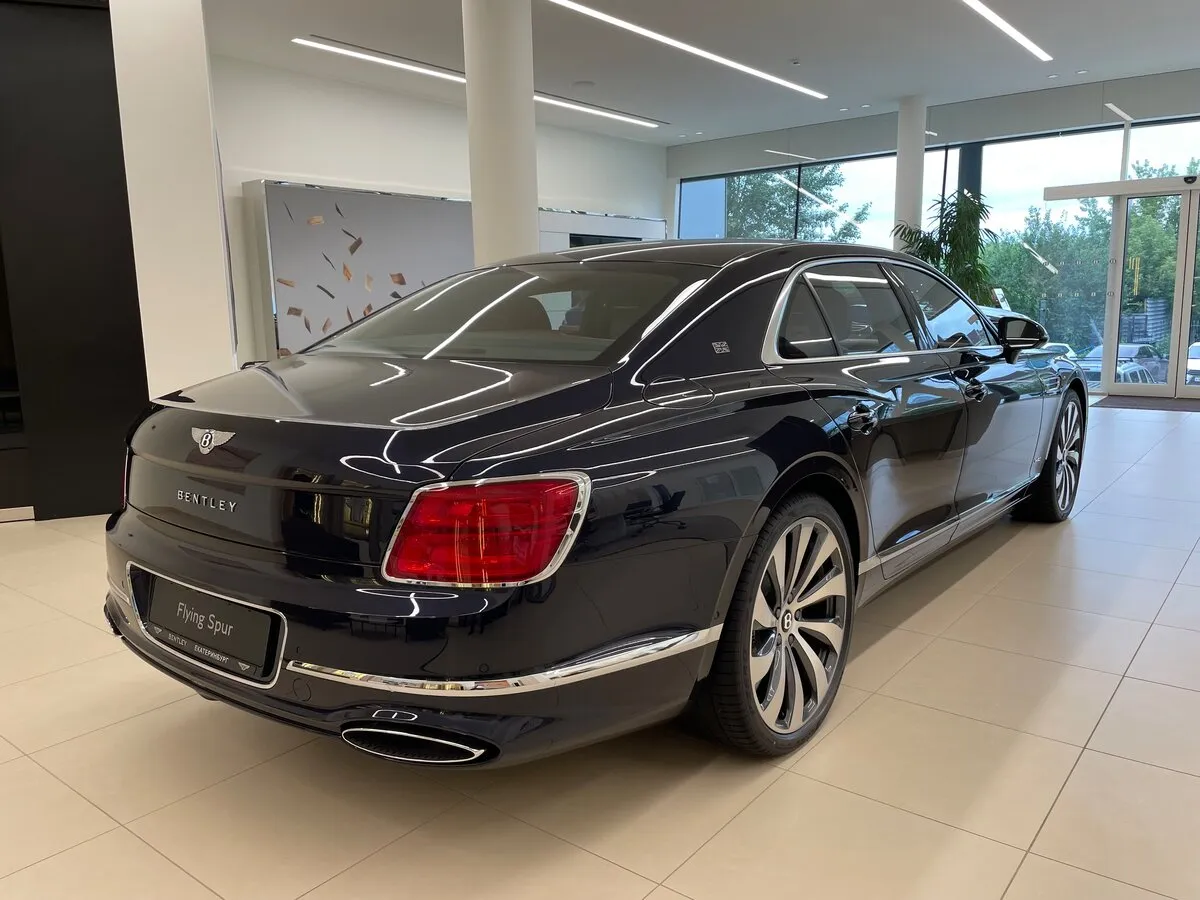
Bentley Flying Spur (3rd Gen) Tuning Guide 2026 — Body Kits, Wheels & Performance


The Bentley Flying Spur (3rd Generation, 2019+) is the quietest, fastest, most technically dense four-door Bentley ever built. It rides on Volkswagen Group's MSB (Modular Standard Platform, longitudinal-engine, rear-biased AWD) — the same architecture as the Porsche Panamera — and combines a 6.0 W12 or 4.0 V8 with all-wheel steering, 48V active roll control and adaptive air suspension. What it doesn't do out of the box is look like the 630 hp missile it actually is. This guide covers every meaningful upgrade available for the Flying Spur (3rd Gen) — body kits, forged wheels, performance software, active-chassis coding — and explains what actually works on MSB.
Platform Overview
The Flying Spur 3rd Gen shares its MSB platform with the Porsche Panamera (971) — not with the Bentayga or Cayenne, which use MLB Evo. That distinction matters enormously for tuning: suspension geometry, ECU communication (PT-CAN / FlexRay), 48V sub-bus wiring, and the rear-biased Torsen/centre-diff strategy are all Panamera-family, not Audi-family. This is why reputable tuners approach the car with Panamera knowledge first and Bentley-specific coding second. Production started in 2019 at Crewe, with a facelift on the horizon; the car is built on an aluminium-intensive multi-material body and is roughly 5,316 mm long on a 3,194 mm wheelbase.
| Platform | MSB (Modular Standard Platform, longitudinal, AWD) |
| Production | 2019 – present (Crewe, UK) |
| Engine — W12 | 6.0L TSI twin-turbo, 626 hp / 900 Nm (Speed: 635 hp) |
| Engine — V8 | 4.0L twin-turbo, 542 hp / 770 Nm |
| Engine — Hybrid | 3.0L V6 TT + e-motor PHEV, 536 hp combined |
| 0–100 km/h | W12 3.8 s · V8 4.0 s · Hybrid 4.1 s |
| Top speed | W12 333 km/h · V8 318 km/h |
| Transmission | 8-speed dual-clutch (W12/V8) · 8-speed Aisin auto (Hybrid) |
| Chassis tech | All-wheel steering, 48V Bentley Dynamic Ride, air suspension 3-chamber |
Body Kits — What Actually Exists for the Flying Spur 3rd Gen
Mansory Flying Spur Programme
Mansory offers the most complete transformation of the Flying Spur currently on the market. The full carbon-fibre programme replaces the front bumper, vented bonnet, rear bumper with quad-tip diffuser, redesigned side skirts and a ducted rear spoiler, all in autoclaved prepreg carbon with matching gloss or soft-visual weave. Mansory pairs the body package with an ECU upgrade on the W12 pushing roughly 700 hp and 1000 Nm, a sports exhaust with actively controlled valves, and a full 22-inch or 24-inch FD.15 / YN.5 forged wheel set. It is the loudest and most divisive kit, and the only one that restyles the greenhouse itself via a carbon roof insert. Expect roughly 40–60 kg added in total carbon but subtracted from the original steel/aluminium panels, so kerb weight is broadly unchanged.
Startech Flying Spur
Startech — the Bentley-focused sister brand of the Brabus Group — takes a deliberately subtle route. The programme is a three-piece carbon add-on set: a front-splitter that extends the factory airdam by around 40 mm, carbon side blades that feather into the rocker line, and a rear diffuser with integrated air-outlet grille. Startech also supplies the Monostar M forged wheel in 22-inch sizes. The Startech kit is popular with buyers who want visual aggression without voiding Bentley factory warranty on painted panels — everything is bolt-on, nothing structural is cut, and Bentley dealers generally accept the cars for service unchanged.
Wald International — Black Bison Edition
Wald of Japan — the original Black Bison bodykit house — has a dedicated Flying Spur programme. Expect ABS front and rear overfenders (around 20 mm wider per side), a lower-lip spoiler, trunk lid lip, and the signature Sports Line rear with quad rectangular exhaust cut-outs. Wald lean heavily on chrome accent work, which suits Middle East / CIS market tastes. Pair with Wald's own Sport Line SR forged wheel in 22x10 front / 22x11 rear, staggered.
MTM (Motoren-Technik-Mayer)
MTM specialise in powertrain rather than body. Their Flying Spur programme is an ECU remap ecosystem: W12 TSI rises to roughly 700 hp / 1050 Nm, V8 TT to around 650 hp / 900 Nm, plus optional downpipes and an air-filter upgrade. MTM do not sell a body kit for the Flying Spur but will integrate with any of the above.
AC Schnitzer — Wheels & Exhaust
AC Schnitzer, though BMW-focused, has a long-standing Bentley sub-programme and offers a stainless-steel active-valve rear muffler with carbon tailpipe trims for the V8 Flying Spur, plus AC1 forged wheels in 22-inch. If you want a brand-name exhaust without Mansory-level commitment, this is it.
Looking for a specific Flying Spur kit or forged wheel set?
Write to [email protected] — we ship Mansory, Startech, Wald and MTM worldwide with door-to-door logistics.
Wheels — Sizes and Fitment for the MSB Flying Spur
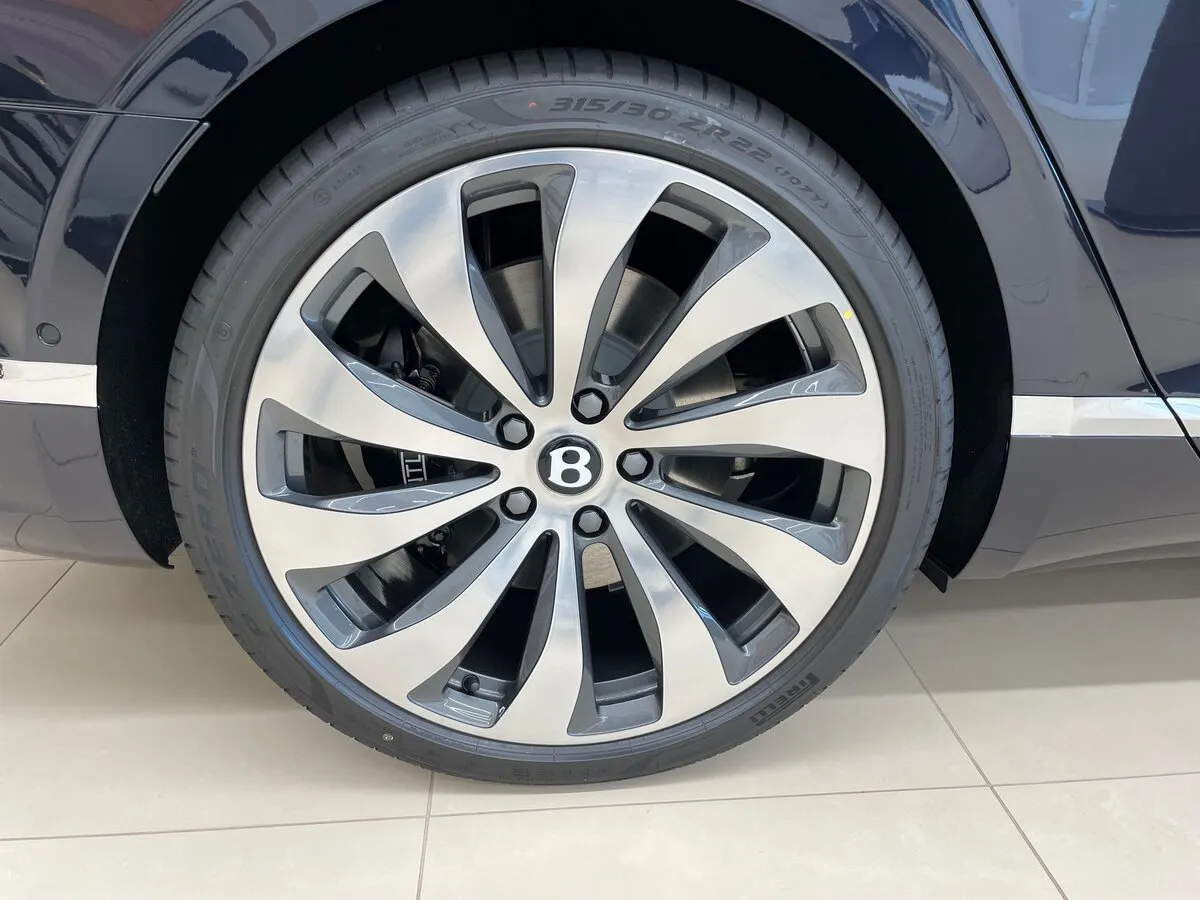
The factory fits 21 or 22-inch wheels; the aftermarket sweet spot is 22-inch forged, occasionally 23-inch for show-car spec. Because MSB is a rear-biased AWD platform, a staggered fitment is not only possible but recommended for the visual stance:
- 22x9.5J ET38 front / 22x11J ET48 rear — classic staggered spec, fits factory arches with 275/35 R22 front and 315/30 R22 rear Pirelli P Zero or Michelin Pilot Sport 4 S NF0/N0 Bentley-homologated tyres.
- 23x10J ET40 front / 23x12J ET50 rear — show spec, requires mild arch rolling and often an air-suspension lift-height recode; Mansory FD.15 and Vossen Forged fit this envelope.
- Forged-only recommendation. Never run cast wheels on a 2.5-tonne Flying Spur at 333 km/h; only monoblock 6061-T6 or two-piece forged centres are safe for the rotating inertia and heat load from the huge steel-hat front rotors (410 mm).
Centre-bore is 71.6 mm and PCD is 5x130. Use Bentley-OEM TPMS sensors or 433 MHz programmable sensors coded to the car's WIN/FRM module.
Performance — Stage 1, Stage 2, Exhaust
The 6.0 W12 TSI (DOFA/DCZA engine code) responds extremely well to software. Typical Stage 1 (ECU-only) on 98 RON lifts the W12 from 626 hp to 705–720 hp and 1000–1050 Nm, and the V8 4.0 TT from 542 hp to 635–650 hp and 880–900 Nm. Stage 2 adds high-flow downpipes with 200-cell catalysts and takes the W12 to 740–760 hp depending on intercooling. Exhaust options: Akrapovic has no direct Flying Spur system, so the usable pipe choices are Capristo (valved stainless), iPE Innotech (titanium), Startech (Brabus-tuned) and AC Schnitzer (V8 only). All four retain the factory active-valve OBD behaviour — critical, because the MSB exhaust ECU will throw a P0401 / P229F flap-error code if it cannot see valve-position feedback.
Interior
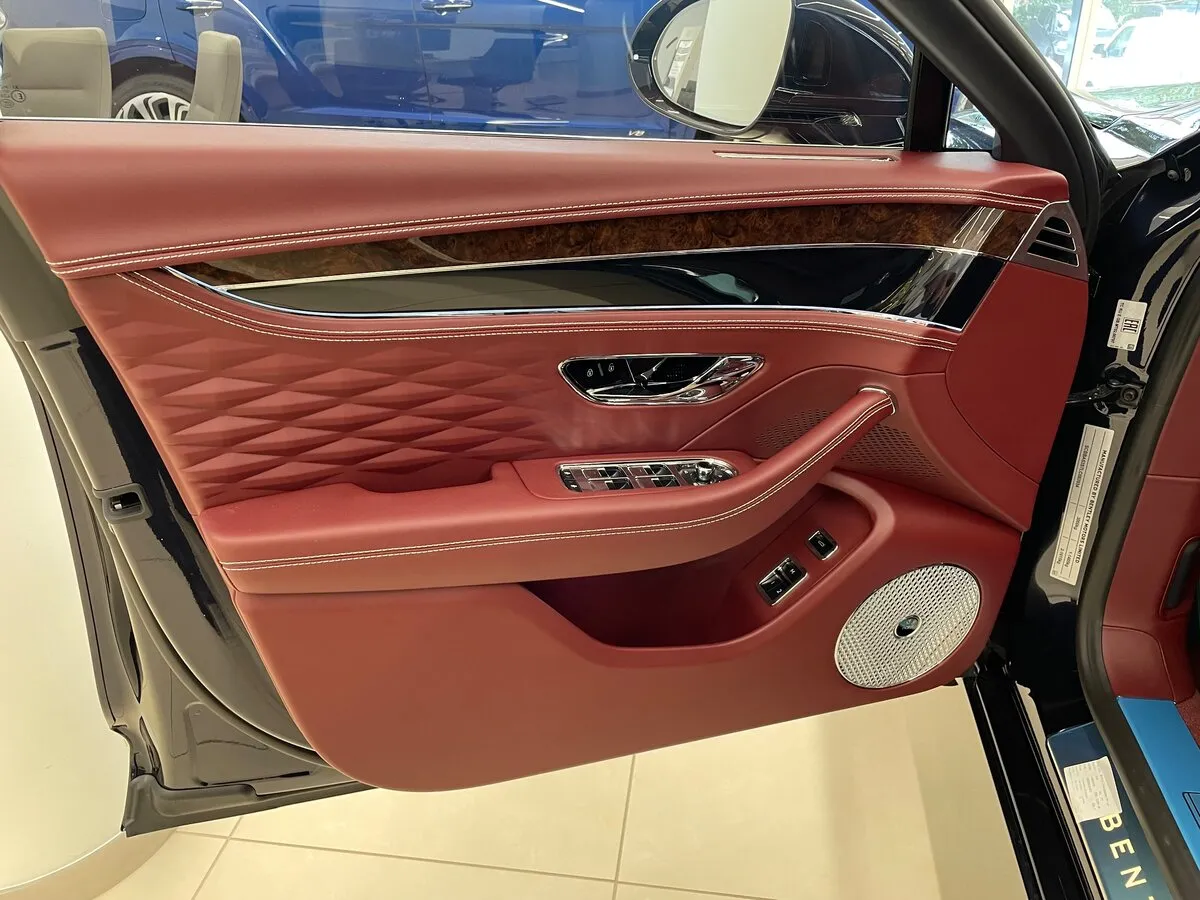
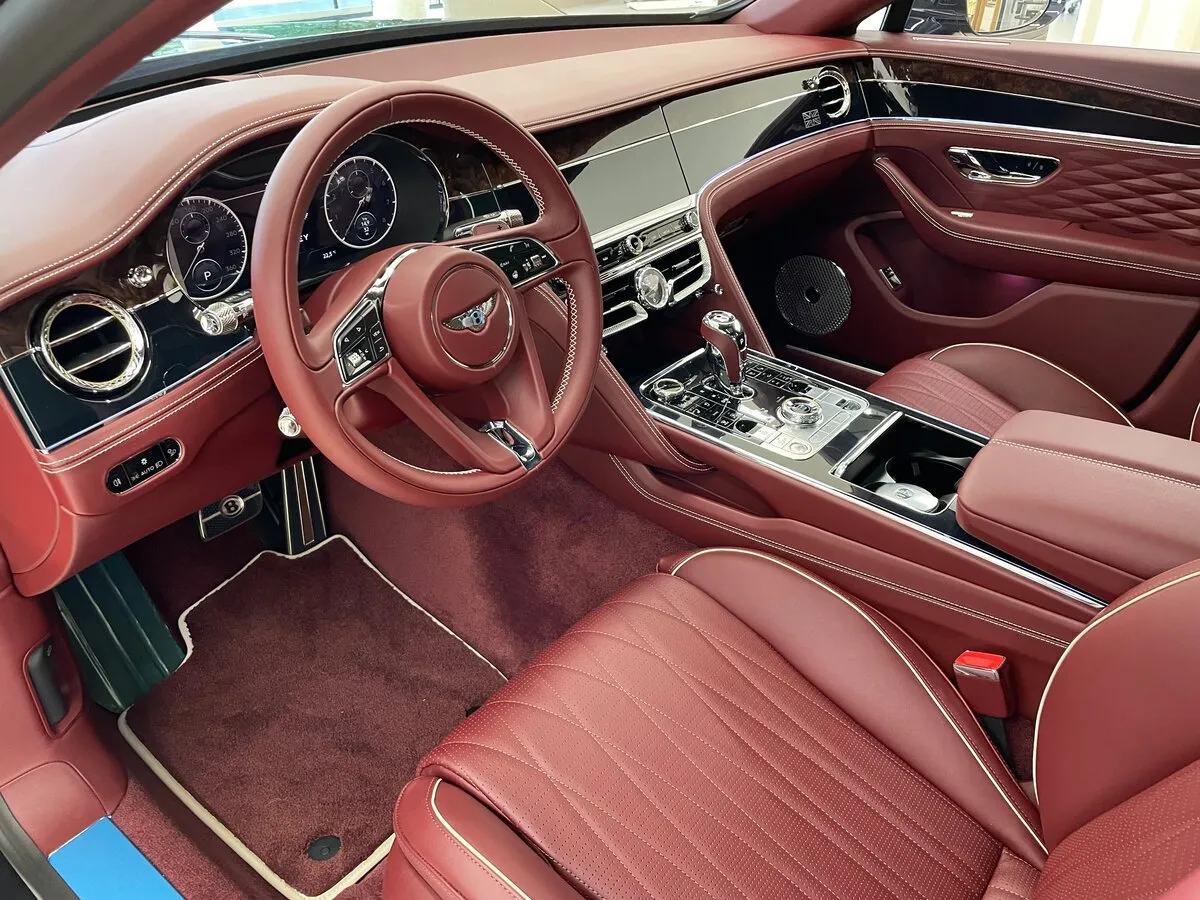
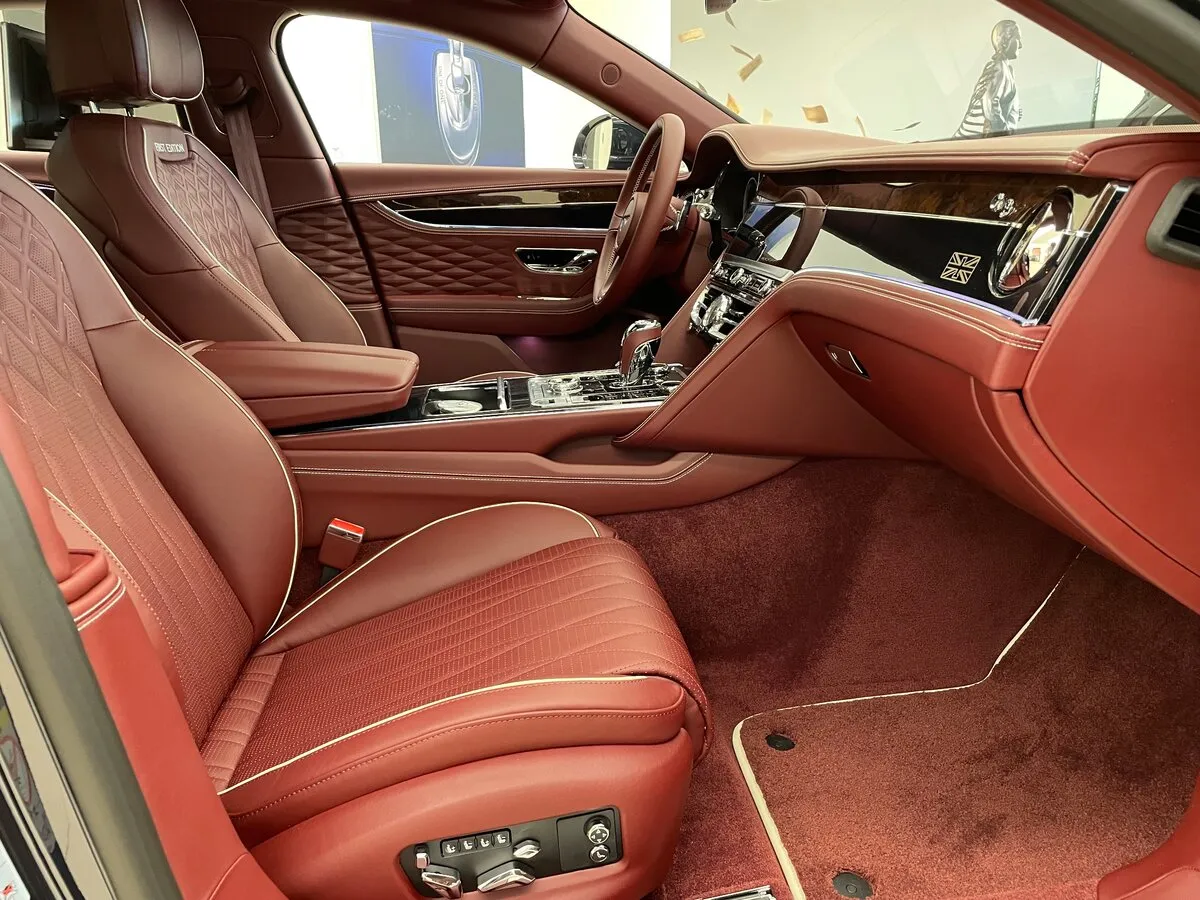
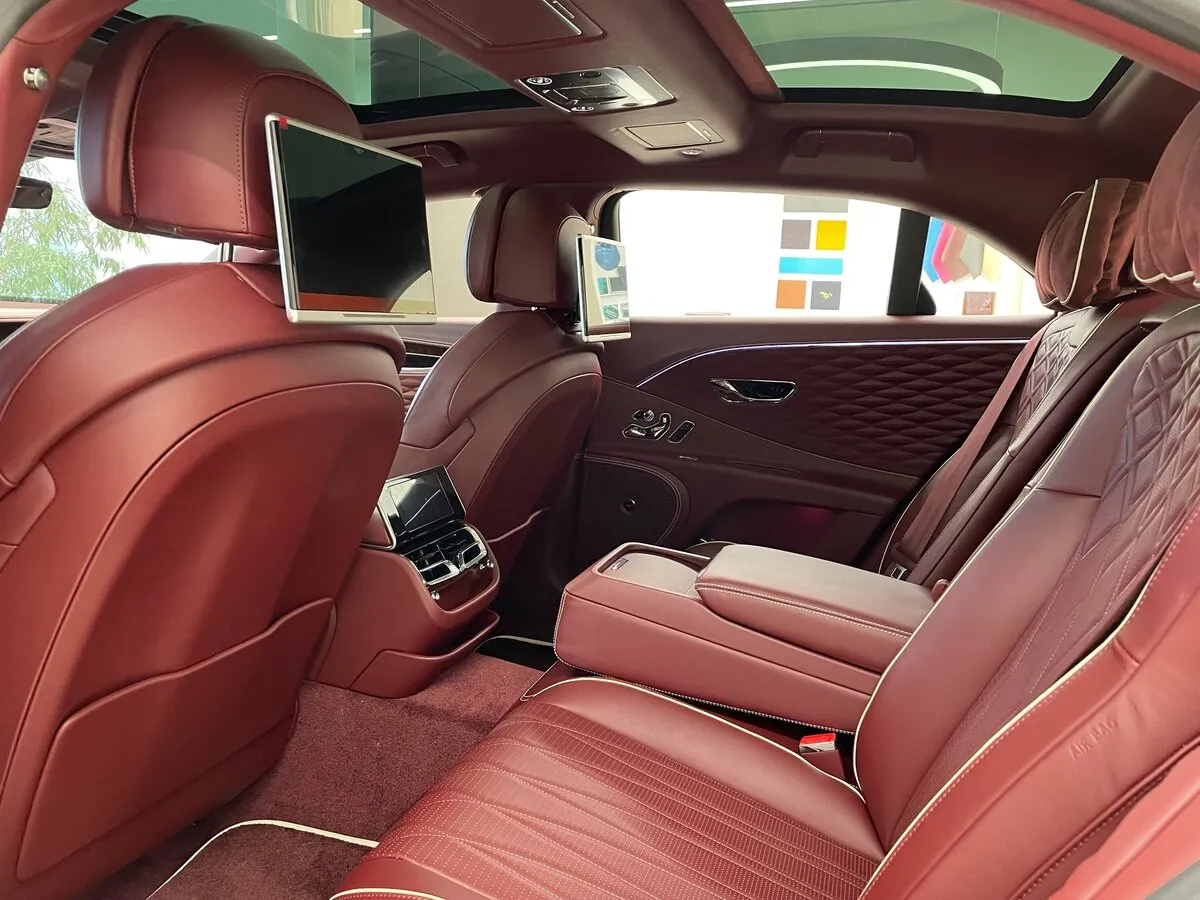
The factory cabin is already arguably the best in the industry, but popular upgrades include Mulliner-style diamond quilting re-stitched in contrast thread, full Alcantara headliner replacement, carbon-fibre Mulliner fascia panel swaps, and Mansory's chocolate-brown / cream bi-colour leather. Startech offers a milder trim refresh with carbon veneer and billet aluminium pedals.
48V Bentley Dynamic Ride — Why This System Changes How You Tune the Car
The most technically interesting thing about the Flying Spur 3rd Gen is not the W12 — it is the 48V Bentley Dynamic Ride active roll-control system, and if you intend to modify the car's chassis in any way, you have to understand it before you touch a spring or a bar.
Bentley Dynamic Ride replaces the conventional passive anti-roll bars with split bars that contain an electro-mechanical rotary actuator in the centre of each bar. The actuator is driven off a dedicated 48V sub-bus (separate from the main 12V electrical architecture) and can apply up to 1300 Nm of counter-roll torque per axle, on demand, in roughly 0.3 seconds. In a corner, the system pre-loads the outer end of the bar in the opposite direction of body roll, so the chassis stays flat up to about 0.6 g without any conventional spring stiffening. In straight-line driving, both halves of the bar are decoupled, which gives the Flying Spur its famously magic-carpet ride.
This matters enormously for tuning. When you lower a Flying Spur on Bentley Mulliner sport springs or H&R lowering springs (typical 25–35 mm drop on the air system's lowest setting), the active anti-roll bars' neutral calibration points shift — the car now sits below the zero-roll reference the actuators expect. Without a coding refresh, the 48V system starts applying counter-roll torque when the car is simply sitting still, and you get a harsh, juddering ride and eventually a stored DTC. The fix is a VCDS / ODIS-E coded adaptation: recalibrate ride-height channels in module 5F (air-suspension ECU) and then re-teach the anti-roll bar zero positions in module 76 (BDR control unit). Any reputable Flying Spur tuner will include this as part of lowering-spring installation.
The second tuning-critical point: you cannot delete the Bentley Dynamic Ride system if the hardware fails. Unlike older passive anti-roll systems where you could simply bolt in a solid bar, the 48V BDR bars are structural members of the chassis geometry, the 48V loom is spliced into the main DC-DC converter, and the CAN gateway expects handshake traffic from the BDR ECU every 20 ms. Remove it and the car throws a cascading error tree: stability control disables, air suspension locks to middle height, and the dash goes red. The correct repair if a rotary actuator fails is a full recoded harness swap (often around USD 18–24k parts plus coding), which is why buyers should specifically verify BDR function before purchasing a used 3rd Gen Flying Spur. For tuners, the rule is simple: keep BDR working, code around it, never delete it.
Frequently Asked Questions
Does the Flying Spur 3rd Gen really share its platform with the Porsche Panamera?
Yes — both cars use Volkswagen Group's MSB (Modular Standard Platform, longitudinal-engine, rear-biased AWD). It is a common misconception that the Flying Spur is related to the Bentayga or the Audi Q7 — those use MLB Evo, which is a different architecture entirely. MSB gives the Flying Spur its long-nose proportions, its Panamera-style front-axle-forward-of-the-engine layout, and access to Panamera development knowledge for suspension, ECU and drivetrain tuning.
Can I run 23-inch wheels on the Flying Spur without problems?
Yes, but with caveats. 23x10 front / 23x12 rear forged wheels fit inside the factory arches with 265/30 R23 and 295/30 R23 tyres, but you will need the air-suspension ride-height recoded down by about 10–15 mm to avoid rubbing at full articulation, and you should expect to replace pads and rotors roughly 20% more often because of the added unsprung mass. We recommend 22-inch forged for daily use and 23-inch only for show or limited road duty.
Is ECU tuning safe on the W12 6.0 TSI?
Stage 1 (ECU only) is well within the W12's mechanical safety margins — the rotating assembly is factory-rated for around 750 hp and the twin BorgWarner turbos have plenty of flow headroom. Stage 2 (downpipes + 200-cell cats + software) at 740–760 hp is still safe on 98 RON fuel but requires a Bentley-specific remap that preserves the active cylinder-deactivation logic, otherwise you will get a lumpy idle and long-term catalyst overheating. Never remove the CDI (cylinder-on-demand) logic from the software on a W12.
Will a body kit or lowering springs void the Bentley factory warranty?
Bolt-on body panels from Startech, Wald or Mansory do not void the base warranty on powertrain components, provided they are installed without drilling structural members. Lowering springs technically alter the chassis and will void the suspension and possibly the transmission warranty if a dealer can prove causation. The safer route for warrantied cars is Bentley Mulliner's own sport-springs kit (where available) or lift-module coding that lowers the air-suspension setpoint electronically — both are accepted by Bentley dealers globally.
Ready to upgrade your Flying Spur?
Contact us at [email protected] for Mansory, Startech, Wald and MTM parts — W12 and V8 — with worldwide door-to-door shipping and VCDS/ODIS-E coding support.